Deep Soil Carbon Sequestration
Durable soil carbon addition that's:
-
Policy-Relevant
-
Scientifically Defensible
-
Market Compatible
-
Policy-Relevant
-
Scientifically Defensible
-
Market Compatible
What is Deep Soil Carbon Sequestration?
Deep Soil Carbon Sequestration (DSCS) is an emerging approach to land management that aims to build stable, long-lasting carbon stocks deep within the soil profile, where they are naturally protected from disturbance and oxidation. Unlike surface-level soil carbon, which is highly variable and easily lost through ploughing, drought, erosion, flooding or microbial activity, deep soil carbon can remain stored for centuries.
The DSCS method focuses on placing highly stable forms of organic carbon — principally biochar enriched with beneficial microbes — directly into the rooting zone, typically between 30 cm and 1 metre below ground (where possible). At these depths, oxygen levels are much lower, soil aggregates are more stable, and microbial communities favour the long-term preservation of carbon. This makes deep-soil storage one of the most reliable pathways for building durable, verifiable carbon sinks on farms.

How Does DSCS Work?
The approach does not replace good soil management. Instead, DSCS enhances it by combining agroforestry, rotational biomass production, microbial amendments, and precision-placement technologies to create new soil carbon — rather than simply relying on protecting what already exists.
DSCS works by increasing the flow of stable, aromatic carbon into deeper layers of the soil where it is less exposed to oxygen, temperature fluctuations, and microbial oxidation. The process uses two complementary mechanisms:
1. Physical placement of stable carbon
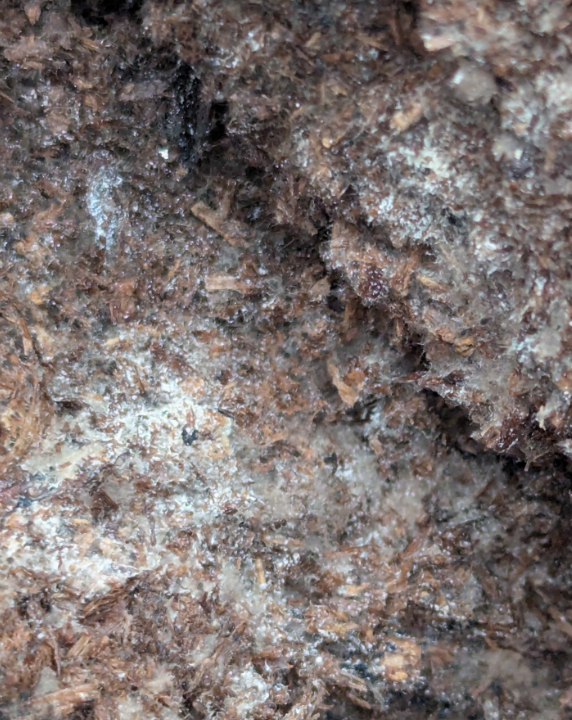
Specially designed augers introduce hundreds of narrow vertical channels per hectare. These channels are filled with a controlled mixture of biochar, organic biofertilisers, and microbial inoculants. Biochar provides a porous, long-lived carbon structure; microbes such as mycorrhizal and melanised fungi help stabilise carbon further by embedding it within the microscale structure of soil aggregates. Together, they create a network of deep carbon anchors that integrate into the soil matrix over time.
2. Biological amplification
The amendments encourage deeper rooting, higher biological activity, improved nutrient cycling, and greater aggregation of soil particles. Over time, this accelerates the formation of stable forms of carbon — such as occluded particulate organic matter (oPOM) and microbial necromass — which are known to persist in soil for centuries.
What DSCS Delivers
Wales’ soils already hold a significant amount of carbon — but current evidence shows that most farms only gain around 1 tonne of CO₂e per hectare per year under business-as-usual management. In contrast, DSCS is designed to add known quantities of stable carbon directly into the soil, dramatically increasing the rate at which durable carbon stocks can be built.
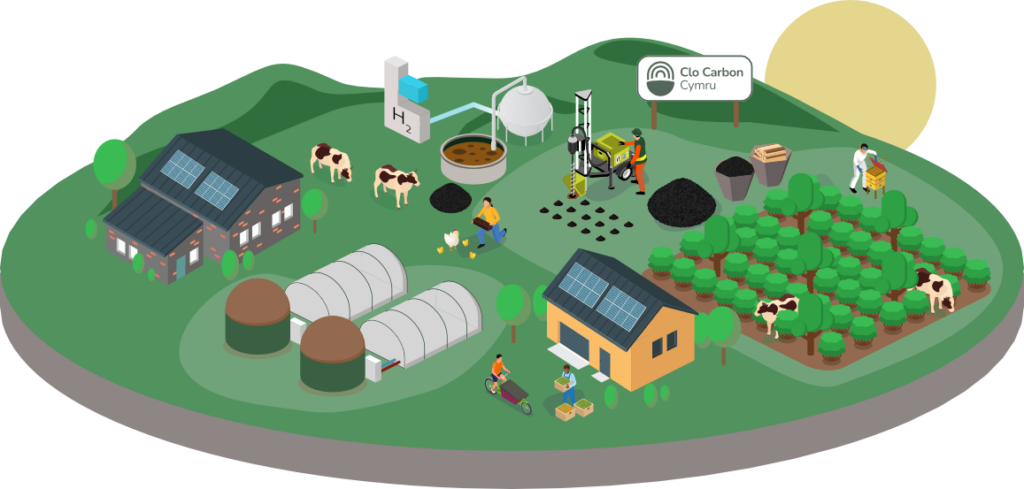
Biochar, Agroforestry & DSCS A Closed-Loop, On-Farm System:
-
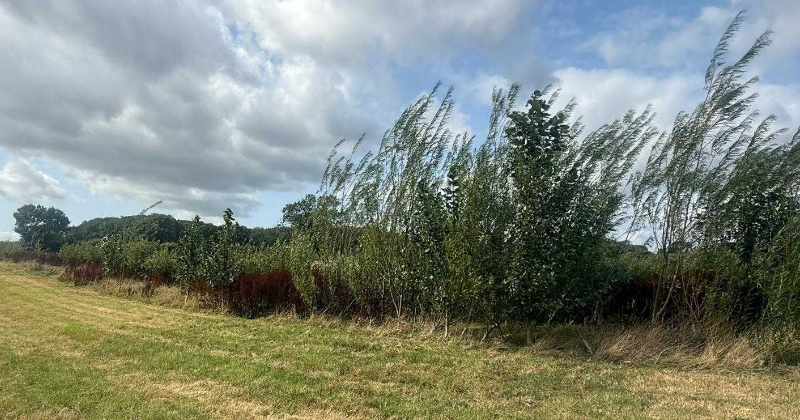
Farmers grow biomass
-
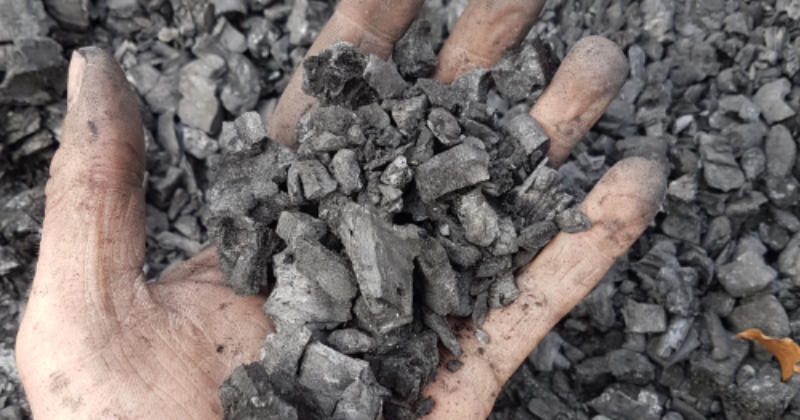
Converted to biochar on-farm (durable carbon)
-
Biochar is returned to the land via DSCS
-
Soil health, fertility, and resilience improve
-
New biomass grows faster, restarting the cycle
For Farmers DSCS Provides:
-
Improved soil fertility and water retention
-
Reduced dependence on imported fertilisers
-
Increased crop resilience
-
Integration with CLOC framework for carbon finance
-
Circular, farm-level carbon economy based entirely on local biomass
How we certify DSCS Biochar carbon
The permanence of biochar carbon is a function of its chemical recalcitrance, not the depth of application; therefore, biochar applied at depth is treated as a durable storage pool equivalent to surface-amended biochar.
Only the biochar carbon itself is credited.
Any additional soil organic carbon (SOC) that may arise through improved biological activity or soil function following DSCS is recognised as a co-benefit but is not credited*
*Pending the development of ISO-compliant quantification and monitoring methods for subsoil SOC).
Explore DSCS with us:
Partnerships established now secure both preferential access & terms for CLOC procurement & offtake agreements.