Agroforestry

Land-use systems that capture, feed & adapt

  • Permanent Storage
  • Full Traceability
  • Community Benefit
  • Intergenerational Wellbeing
  • Permanent Storage
  • Full Traceability
  • Community Benefit
  • Intergenerational Wellbeing

What is Agroforestry?

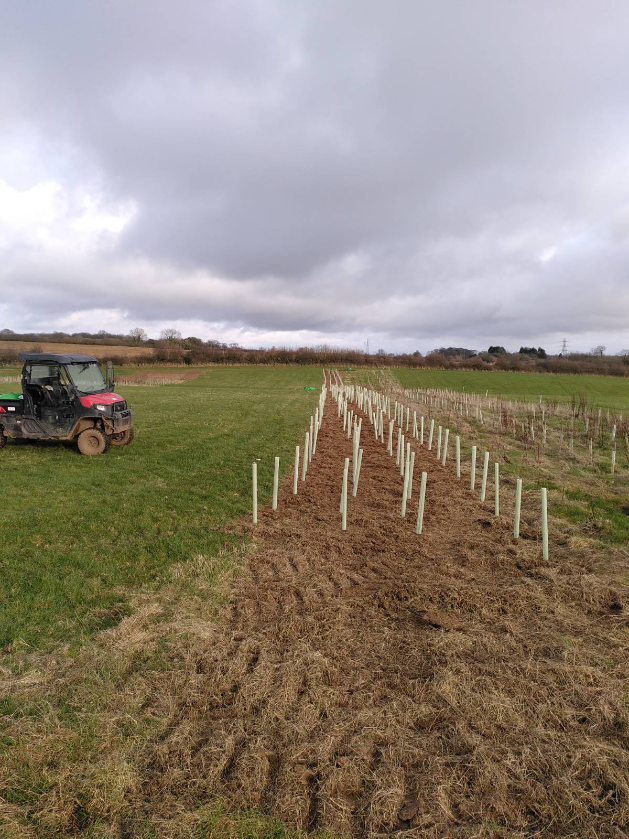
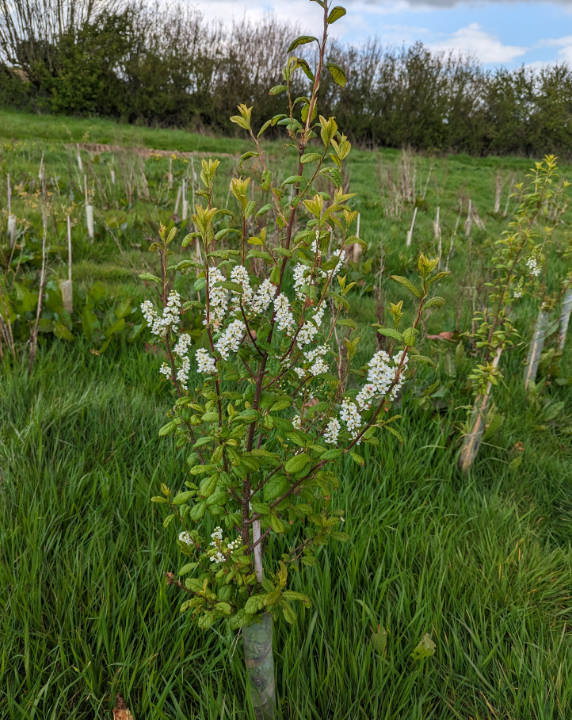
Agroforestry is the integration of trees and shrubs into farmland in a way that enhances both agricultural production and the natural environment. Unlike plantation forestry, agroforestry is designed to work alongside crops and livestock, using carefully planned rows, alleys, shelterbelts or riparian plantings to improve the resilience and productivity of the whole farm system.


At its heart, agroforestry is a nature-positive farming approach that strengthens biodiversity, improves soil health, increases farm profitability and helps remove carbon from the atmosphere. It draws on centuries-old practices found throughout Wales — from wood-pasture to hedgerow coppice systems — while applying modern ecological and climate science to optimise results.

How Agroforestry Removes & Stores Carbon

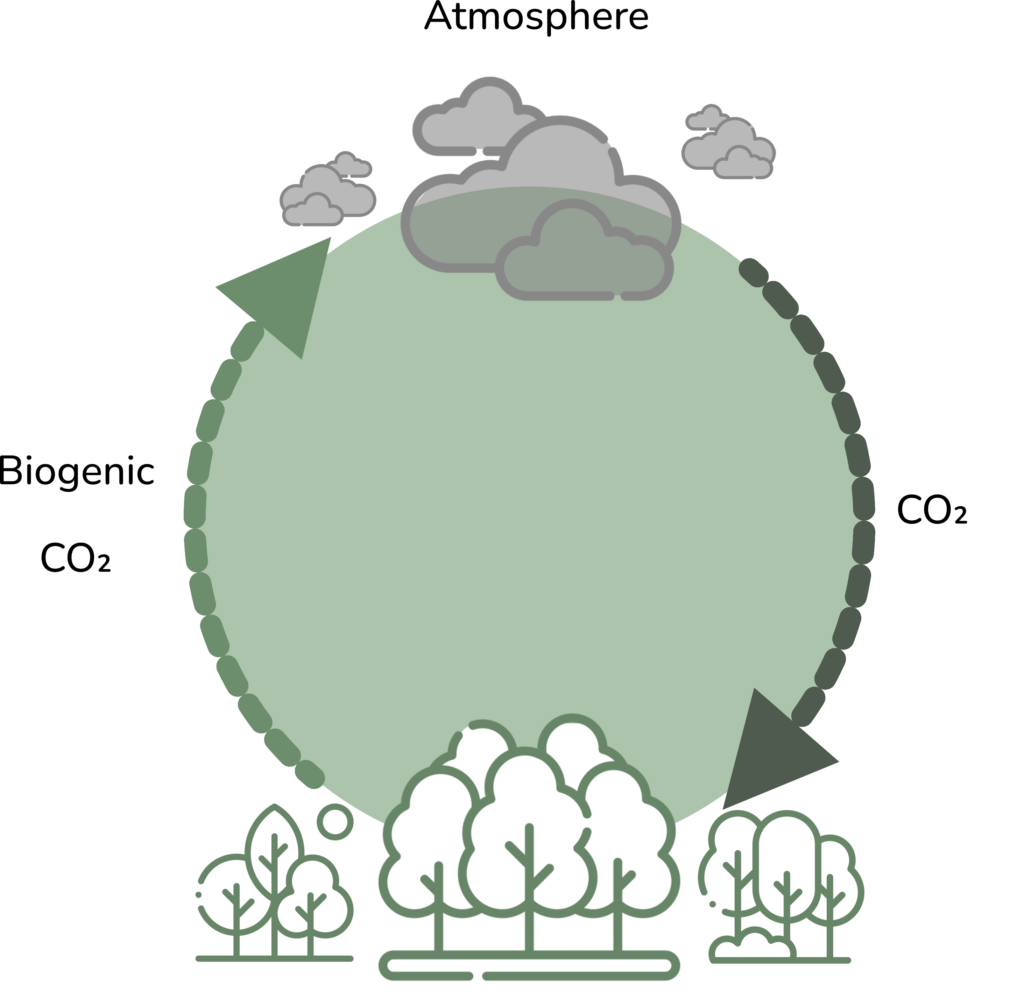
Trees and shrubs capture carbon dioxide from the atmosphere and store it in their trunks, branches, roots, leaves and surrounding soil. Agroforestry systems accelerate this natural process because they combine fast-growing woody biomass with productive farmland, increasing overall carbon capture compared with grassland-only systems.

Carbon removed through tree growth can be stored in three ways:

  • Short and medium-term biological storage (living trees, shrubs and soils)
  • Durable carbon storage when pruned or harvested biomass is converted into biochar
  • Landscape-scale storage through improved soil structure, root mass and reduced erosion

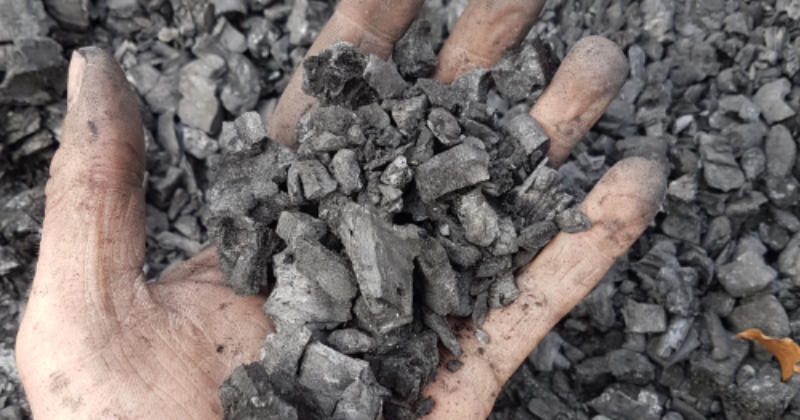
When agroforestry is paired with biochar production, part of the woody biomass is transformed into stable carbon that remains locked away for centuries or longer. This creates a powerful, measurable carbon-removal pathway that benefits both the climate and the farm.

Agroforestry On Working Farms

Agroforestry systems are designed around how the farm already operates. They do not remove land from production — instead, they make the land more productive and resilient. Listed here are three primary systems used in Wales.

All agroforestry systems in the CLOC framework incorporate managed rotations, where prunings and small-diameter stems produce renewable biomass, which is then converted into durable carbon through biochar production.

  • Silvoarable systems Where rows of trees grow between crop alleys. Trees provide shade, shelter and deeper roots while crops benefit from improved soils and moisture retention.
  • Silvopastoral systems Where livestock graze between scattered trees or structured tree rows. Animals gain shade and shelter; the trees gain nutrients; and the soil becomes richer and more biologically active.
  • Riparian and shelterbelt plantings Trees along streams, field edges or windy areas reduce erosion, protect watercourses, and improve microclimates for both crops and animals.

Why Agroforestry Matters To Wales

Wales’ agricultural landscape is dominated by grassland and pasture, much of it exposed to wind, drought, waterlogging and biodiversity decline. Agroforestry directly addresses these pressures while creating new economic opportunities for farmers.

The Benefits Include:

  • Higher resilience to climate change Improved soils, reduced erosion, better water infiltration
  • Higher farm productivity More fodder, shelter for livestock and improved crop health
  • Increased biodiversity Habitat for pollinators, birds, mammals and beneficial insects
  • New income streams Biomass for biochar, carbon removal certificates, improved yields
  • Natural flood mitigation Deeper roots and improved soil structure
  • Enhanced landscape value Strengthening cultural and ecological identity of Welsh farms

Agroforestry: The Beating Heart Of Our Framework

Agroforestry is central to the Carbon Lock Origin Certificate (CLOC) system because it provides a consistent, sustainable source of biomass that can be turned into long-lived carbon storage through biochar. Each hectare of agroforestry can produce a reliable rotation of small-diameter stems and prunings which fuel durable carbon removal without compromising food production.

Agroforestry therefore acts as the living engine of the CLOC system — capturing atmospheric carbon, strengthening farm ecosystems, and supplying renewable biomass for conversion into stable, long-term carbon stores.

For CLOCs, agroforestry provides:
  • The biomass feedstock for verified biochar production
  • Nature-based carbon removal from tree growth
  • Biodiversity gains aligned with the IUCN Global Standard for Nature-based Solutions
  • Long-term landscape resilience, improving soil, water and microclimate conditions

Explore Agroforestry With Us...

Partnerships established now secure both preferential access & terms for CLOC procurement & offtake agreements.

Part of a whole-farm system

Agroforestry is one of the 3 complementary nature-based methodologies that we utilise, alongside:

Deep Soil Carbon Sequestration

Biochar