
Setting The Standard For
Nature-Based Carbon Dioxide Removal
We develop science-based land-use systems and technologies that integrate carbon removal, biodiversity enhancement, and economic transition.
Our work connects farm-level action with national climate goals, fostering partnerships between farmers, community organisations, and both public and private sectors.
Emerging Scientific Consensus
Global corporate climate action is evolving unevenly. Some companies are deepening their decarbonisation efforts by investing in high-integrity carbon removals. Others are slowing their ambition or extending timelines as economic and political pressures shape decision-making.
Across this landscape, strategies vary, but the need for credible, science-aligned pathways to address residual emissions is becoming clearer.
Biochar Stands Out
Against this backdrop, high-integrity carbon removals are no longer optional - they are integral to any serious net-zero strategy. Among the available options, biochar carbon removal stands out for its durability, verifiability, scalability, and the co-benefits it delivers for soils, biomass management, and local resilience.
Streamlined, Regional Solutions
As carbon and CO₂e rapidly evolve into globally traded commodities, so market complexity has increased.
There is growing consensus that regionally specific, place-based methodologies can deliver credible, streamlined alternatives that maintain scientific integrity while directly supporting local economies.
Our Solution
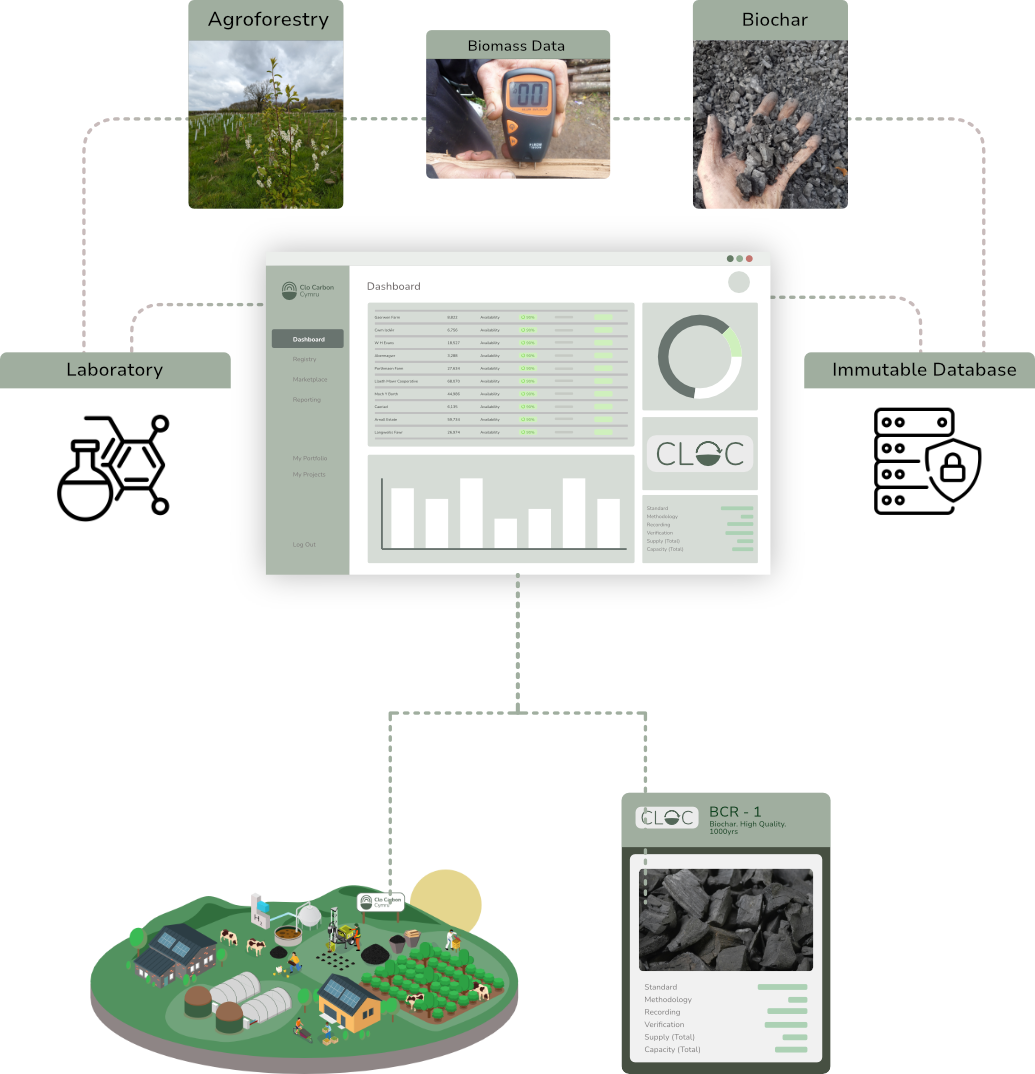
Our platform transforms agricultural carbon removal through Carbon Lock Origin Certificates (CLOCs) - each representing one tonne of CO₂e permanently removed from the atmosphere and permanently stored in biochar.
CLOCs represent physical carbon removals, backed by laboratory-verified biochar, immutable chain-of-custody tracking & mandatory biodiversity enhancement on participating farms.
This direct approach cuts through market complexity, directly connecting corporate & institutional climate investments with agricultural communities, whilst ensuring every tonne removed strengthens both climate resilience and farming livelihoods.
CLOCs deliver carbon removal you can audit, biodiversity enhancement you can measure, and rural prosperity you can see.
Carbon Lock Origin Certificates
Setting the standard for high-integrity, nature-based
Biochar Carbon Removal
Our certification framework integrates 3 complementary nature-based methodologies:
Silvoarable & Silvopastoral Agroforestry
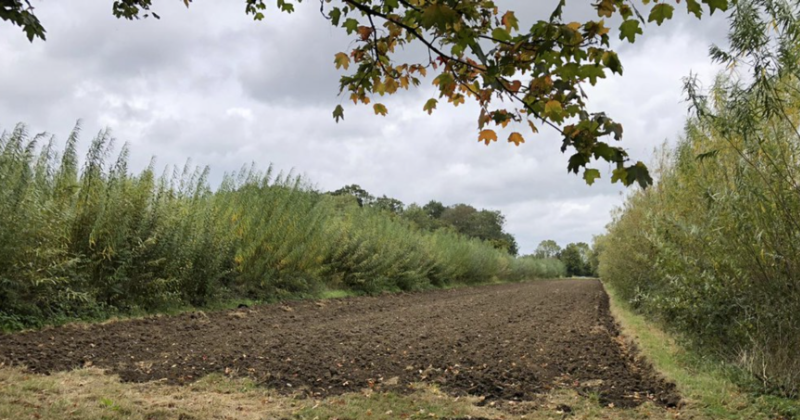
Drawing from the coppice-with-standards silvicultural system
Science-led Biochar Production
Governed by rigorous manufacturing and testing protocols, with preliminary LCA assumptions resulting in:
Fixed-Carbon Biochar
Deep Soil Carbon Sequestration
Novel Clo Carbon Cymru IP, leveraging biochar produced for CLOCs to develop durable soil carbon storage
Locking Atmospheric Carbon, Unlocking National Capacity
Our 2032 Targets:
Annual durable CO₂e removals
Annual biochar production
Total Farmers Supported
New agroforestry systems
Delivering Truly Nation-Based Scalability
The total agroforestry & on-farm biochar production required to meet our 2032 targets would require less than 30% of the total number of farms in Wales to become CLOC suppliers.
*Based on 5-hectares per farm, distributed over the average 48-hectare farm-holding, in a series of 10-metre wide ‘alleys’.
Agriculture: June Survey Results. Cardiff: Welsh Government.
Primary source for registered holdings, business structures, and land use.
Farm Business Survey Wales (2023) – Farm Incomes in Wales 2022–23. Aberystwyth: Aberystwyth University and Welsh Government.
Core evidence for subsidy forming the majority of net farm income and viability without support.
Total Farm Requirement
Data Sources:
Agriculture: June Survey Results. Cardiff: Welsh Government.
Primary source for registered holdings, business structures, and land use.
Farm Business Survey Wales (2023) – Farm Incomes in Wales 2022–23. Aberystwyth: Aberystwyth University and Welsh Government.
Core evidence for subsidy forming the majority of net farm income and viability without support.
Work With Us
For Agriculture, Industry & Institutions
For Farmers...
Decarbonised Revenue, Generational Stability
By growing the biomass required for conversion to biochar, farmers can generate new income streams & start building the financial legacy required for future generations to continue farming in Wales.
Short-rotation harvesting of existing woodlands, hedgerows and new agroforestry systems enhances biogenic carbon dynamics. It also accelerates photosynthetic capture rates, and ensures that more captured carbon becomes stabilised in durable forms like biochar. This adaptive management approach is critical in an era of increasing climatic volatility.
Farmer-First Land management
Practical, Profitable Systems Built For Working Farms
-
Multiple Revenue Streams Certified carbon removals, continued agricultural production & new decarbonised product diversification
-
Work with existing operations Land management that integrates with current farm activities
-
Increase species diversity Enhanced farm ecology without sacrificing productivity
-
Biochar for farm use Reduce operational emissions, enhance growing media, improve soil water retention
For The Private Sector...
Tracible Investments, Genuine Removals
The CLOC Framework facilitates the creation of a circular economic model, in which financial flows between rural communities and public or private investors are explicitly linked to verifiable carbon-removal outcomes.
These flows are governed by CLOCs transitional reinvestment criteria, targeting hard-to-abate emissions within Scope 3 supply chains, as defined by the Greenhouse Gas Protocol.
Future Proof Removals
Long-Term Carbon Management
-
Unimpeachable Audits Our immutable registry provides complete transparency, with single-source audit trails from farm production through certificate retirement
-
Intergenerational climate solutions Combining permanent biochar storage with measurable biodiversity & soil health improvements
-
Bespoke CDR portfolios We can tailor carbon removal strategies to match your operational priorities and timescales
-
Value chain decarbonisation Address hard-to-abate Scope 3 emissions through verified agricultural solutions
For The Public Sector...
Circular Economics &
Measurable social impact
Unlike traditional offset markets, the CLOCs system prioritises local reinvestment. Each certificate links directly to on-farm actions, ensuring that capital generated through carbon finance supports biodiversity enhancement, soil health, and community wealth creation.
This design reflects a nation-based carbon circularity, aligning climate action with socio-economic renewal, while advancing the objectives of the Well-being of Future Generations (Wales) Act 2015 - Establishing a model of climate accountability in which Wales becomes a world-leading demonstrator of place-based decarbonisation
Direct Grassroots Action
Local Climate Justice & Wellbeing Focus
-
New Green Employment We're targeting 100+ truly green local jobs created by 2032 - Across biochar production, agroforestry management, mechanical engineering, laboratory services & more
-
Community Carbon Value Our non-extractive, community-centric certification criteria & cooperative farm model supports new CIC creation, and ensures carbon value remains as localised as possible.
-
Tackling Food Insecurity Our land-use systems prioritise local food production & distribution, alongside carbon removal
-
Measurable Wellbeing Impacts Long term carbon agreements foster economic stability. While verifiable co-benefits addressing poverty, housing & wellbeing of future generations are written into our standards - Delivering key indicators, measurable against policy.
We're Unifying Cross-Sector Climate Action
Our platform provides the missing climate infrastructure essential for aligning & delivering asymmetrical environmental goals
Bridging Agriculture, Industry & Public Sector Needs
Effective CDR deployment requires significant coordination across sectors - Our platform infrastructure brings agricultural producers, industrial emitters, and public institutions together in ways that specifically align collective environmental efforts into one, cohesive, verifiable set of actions and results.
Certification Architecture
Guided by & consistent with a hierarchy of internationally recognised standards and governance frameworks:
ISO
ISO 14064-2:2019
ISO 14044:2006
ISO 14040:2006
ISO 14064-3:2019
ICVCM
The ICVCM Core Carbon Principles (2023–24)
Carbon Direct / Microsoft
Criteria for High-Quality Carbon Dioxide Removal (2025)
Isometric
The Isometric Biochar Production and Storage Protocol (Version 1.1, 2025)
University of Oxford
Principles for Net-Zero Aligned Carbon Offsetting (2024 revision) guide market and buyer-alignment considerations
IUCN
The International Union for Conservation of Nature (IUCN) Global Standard for Nature-based Solutions
Welsh Government
The Well-being of Future Generations Act (Wales) 2015
EBC
The European Biochar Certificate (EBC)
IBI
The International Biochar Initiative (IBI)
CRFC
The EU Carbon Removal Certification Framework (CRCF)
SBTI
The Science Based Targets Initiative (SBTi) Corporate Net-Zero Standard (Draft V2, 2024–25)

Testimonials
Independent Feedback
The Welsh rural landscape unquestionably faces deep transformation in search of viability, nature restoration and climate responsibility. So far, the responses to this challenge have been piecemeal, small scale, and, to be frank, often lacking in the market credibility needed to achieve scale.
In this context, the launch of the Clo Carbon platform is hugely welcome. It tackles the climate crisis head on with a cool-headed appreciation of the way carbon markets work - and are broken - and with a rooted and credible approach to removing - really removing - carbon from the atmosphere. In addition, the approach is holistic (avoiding a focus on carbon to the exclusion of all else), resource-circular, in alignment with a number of longstanding socio-economic and environmental policies and objectives, and, critically, promises improved local economic outcomes and hence potentially wide acceptance.
The fact that such a scheme has emerged, bottom-up from Wales is the icing on the cake. It is only through the kinds of innovations exemplified by Clo Carbon that we have any hope of building a truly sustainable, climate-friendly and prosperous Wales.
Clo Carbon Cymru stands out for their commitment to developing genuinely novel carbon removal methods. Their integration of biochar stability, engineered delivery systems, and practical farming applications addresses critical gaps in current CDR approaches.
Our collaboration has been mutually beneficial-providing real-world testing opportunities for us, and research support and academic validation for them. Based on early success, we see significant opportunity for further partnership, including joint UKRI bids, Future Leaders Fellowships, and potential Horizon or Programme Grant applications.
There is strong, genuine enthusiasm across the university for Clo Carbon Cymru’s approach, and we are committed to supporting their ongoing development through sustained research collaboration.